
Types of dog brushes: how to choose the best dog brush for your dog’s coat
By Mila · Last reviewed October 2026
You bought a brush. Your dog still sheds, or the brush skates over the top and the tangles are back by Friday. Usually the brush is fine. It was made for a different coat.
The best dog brush is the one that matches your dog’s coat type, and you can work that out in a minute with your hands. Do the coat check below, then use the table to see which brush to buy and how often to use it.
One of the seven tools in this guide tells you whether your brushing worked. It is the plainest one on the list, and it comes last.
A note on what we sell. The Paw Room stocks some of these tools and not others. Where we stock one, we link it. Where we don’t, we still tell you what to look for.
Quick answer
- Short, smooth coat: a rubber or bristle brush.
- Double coat: an undercoat rake, then a slicker brush.
- Long, silky coat: a pin brush and a metal comb.
- Curly coat: a slicker brush, a comb and regular groomer visits.
- Wire coat: a slicker or pin brush, with hand-stripping left to a groomer.
Find your dog’s coat type in 60 seconds
Kneel next to your dog and try these four checks. You don’t need any tools.
- Part the fur at the shoulder. Look for a second, softer layer under the top hairs. It feels like cotton wool and is sometimes a lighter color. If you find it, your dog has a double coat.
- Run your fingers against the grain. Short hair that springs back flat is a smooth coat. Hair that feels coarse, like a scrubbing pad, is a wire coat.
- Look at the ends. Hair that curls or waves, even a little, puts your dog in the curly group. These coats tangle fastest.
- Think about haircuts. Hair that keeps growing and needs trimming points to a long or silky coat. Hair that stops at one length and sheds is short or double.
Many dogs are a mix, especially crossbreeds. Choose the brush for the part of the coat that tangles or sheds most, then add the second tool from the table.
The 7 types of dog brushes and what each one does
Slicker brush
A slicker has rows of short, fine wire pins, usually bent at an angle, on a flat pad. It pulls loose hair and small tangles out of medium, long, curly and wire coats.
Press lightly. The pins work close to the skin, and the American Kennel Club warns that pressing hard can hurt your dog. Brush one small section at a time.
Undercoat rake
A rake has one or two rows of metal teeth that reach through the top coat into the soft layer underneath. It is the main tool for double-coated dogs, whatever the coat length. Pick teeth that are about as long as your dog’s coat.
Pin brush
A pin brush has wire pins spaced wider apart, often with rounded or rubber tips. It is a finishing brush for long coats and a gentle way to work through a wire coat. It does little on short hair.
Bristle brush
Natural or synthetic bristles sit close together, like a hairbrush. On a short coat, a bristle brush lifts dust and loose hair and adds shine. On a double coat, use it only to finish.
Rubber brush or grooming glove
Short rubber nubs grip loose hair on short coats and massage the skin at the same time. They can’t reach through a long or thick coat. Most work wet or dry.
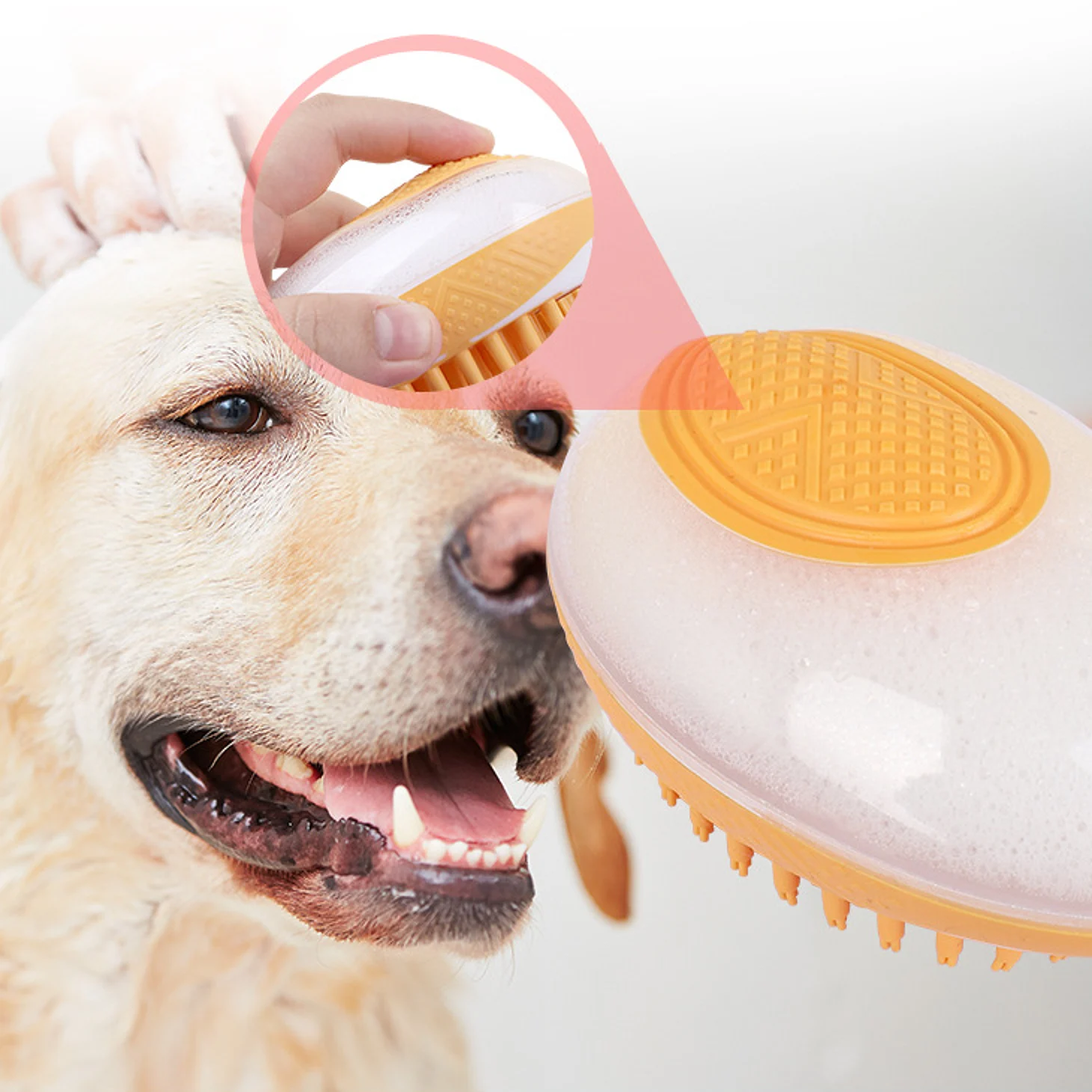
Our Dog Bath Brush with Shampoo Chamber has soft rubber bristles. Used dry, it works as a rubber brush on short coats. On bath day, it carries the shampoo down to the skin.
Deshedding tool
Deshedders pull out loose undercoat during shedding season. Edged blades and deshedding combs do the most work on thick coats. Use them gently, because VetriScience notes that a harsh deshedder can damage the top coat.
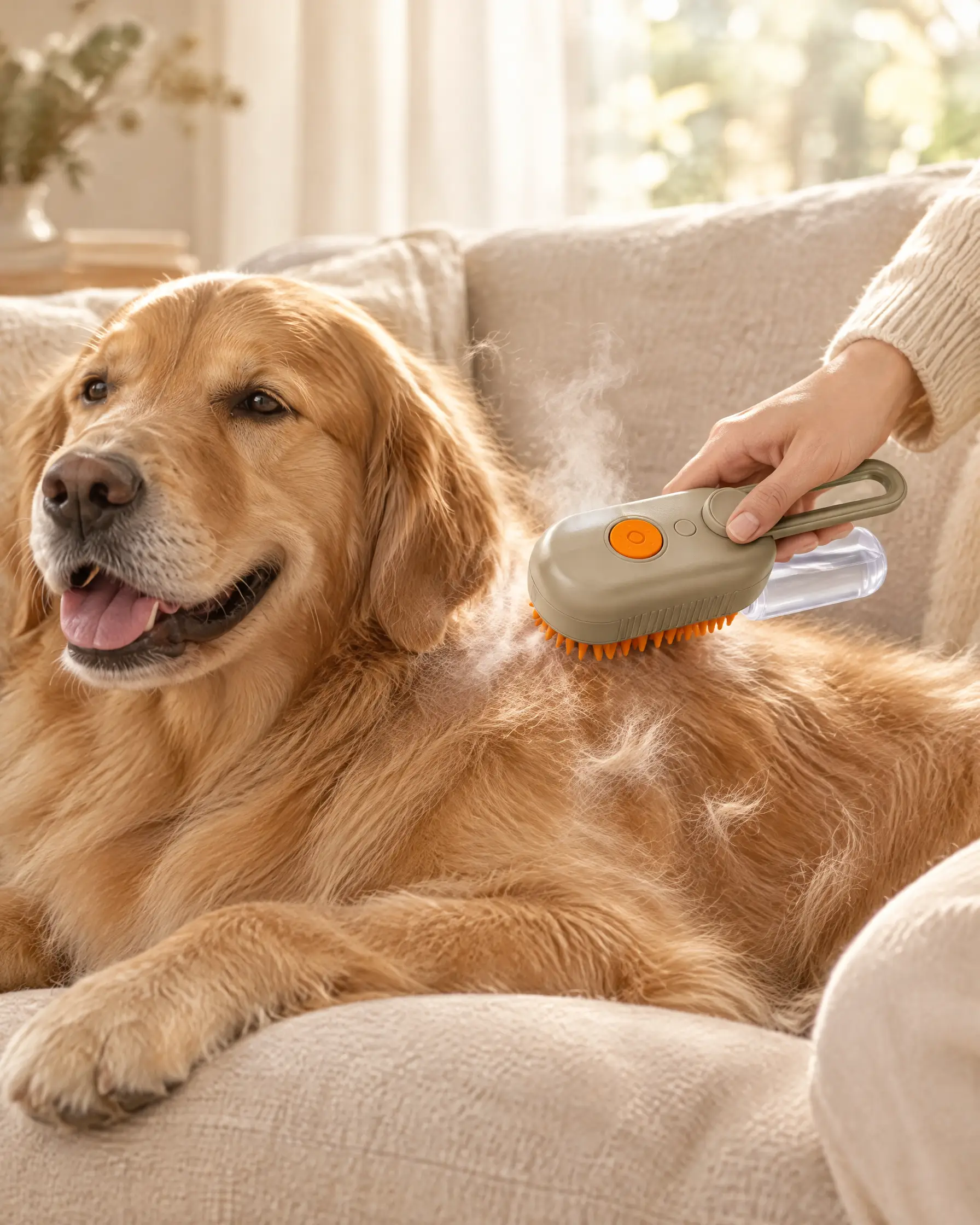
The Steam Deshed Brush takes a softer approach. It sprays a fine mist of water as you brush, so loose hair clings to the teeth instead of floating onto the sofa.
It suits short and medium coats, and long coats if you work in sections. It is not a rake. On a thick double coat, use it for the loose fur on top between rake sessions.
Metal comb
Here is the tool that tells you whether brushing worked. A steel comb has wide teeth at one end and narrow teeth at the other.
Run it through the coat after you brush. Where it glides, you are done. Where it snags, a tangle is starting, so go back with the brush. Use the wide teeth on thick or curly coats and the narrow ones on short hair and around the face.
Best dog brush for each coat type
| Coat type | Example breeds | Main brush | Add this | How often | What we stock |
|---|---|---|---|---|---|
| Short, smooth | Beagle, Boxer | Rubber or bristle brush | Spray brush in shedding season | Once a week | Dog Bath Brush (used dry), Steam Deshed Brush |
| Double | Husky, Golden Retriever, German Shepherd | Undercoat rake | Slicker brush and metal comb | 1–2 times a week, more when shedding | Steam Deshed Brush for loose fur on top |
| Long, silky | Shih Tzu, Yorkshire Terrier | Pin brush | Metal comb, slicker for tangles | Daily or every other day | Dog Bath Brush on bath day |
| Curly | Poodle, Bichon Frise, doodles | Slicker brush | Metal comb and groomer visits | A light brush most days, a full comb weekly | Nothing yet |
| Wire | Schnauzer, most terriers | Slicker or pin brush | Metal comb, hand-stripping by a groomer | 1–2 times a week | Nothing yet |
The frequencies follow the VetriScience coat guide and the American Kennel Club grooming guide. Your dog may need more or less. A coat that tangles between sessions needs shorter gaps.
Slicker brush vs undercoat rake
Owners of double-coated dogs often buy one of these and expect it to do the other’s job. They work on different layers. The rake goes underneath and pulls out the loose undercoat. The slicker works on the top coat and catches small tangles.
Use them in that order: rake first, slicker second, comb last. If you can buy only one for a Husky or a German Shepherd, buy the rake. A slicker on its own leaves the undercoat in place, and that is the hair that ends up on your floor.
Dog grooming tools for beginners: a simple starter kit
You don’t need a salon kit. Most homes do well with a short list:
- The main brush for your dog’s coat, from the table above.
- A metal comb with wide and narrow teeth.
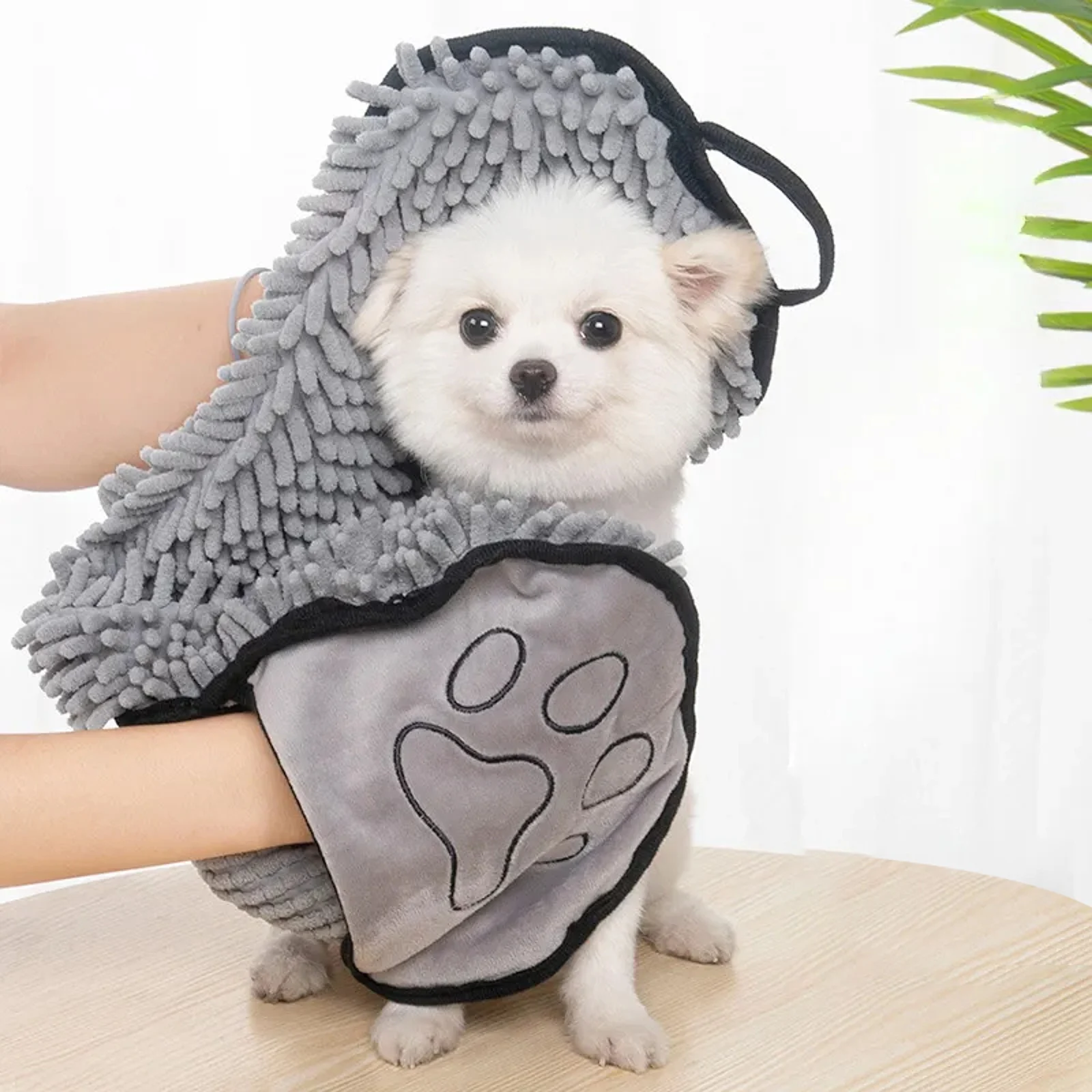
- A bath brush and a towel. The Dog Bath Brush with Shampoo Chamber and the Microfiber Dog Towel with Hand Pockets cover bath day.
- Nail clippers or a grinder. We stock the Rechargeable Dog Nail Grinder, and our guide on how to trim dog nails at home shows how to use either tool.
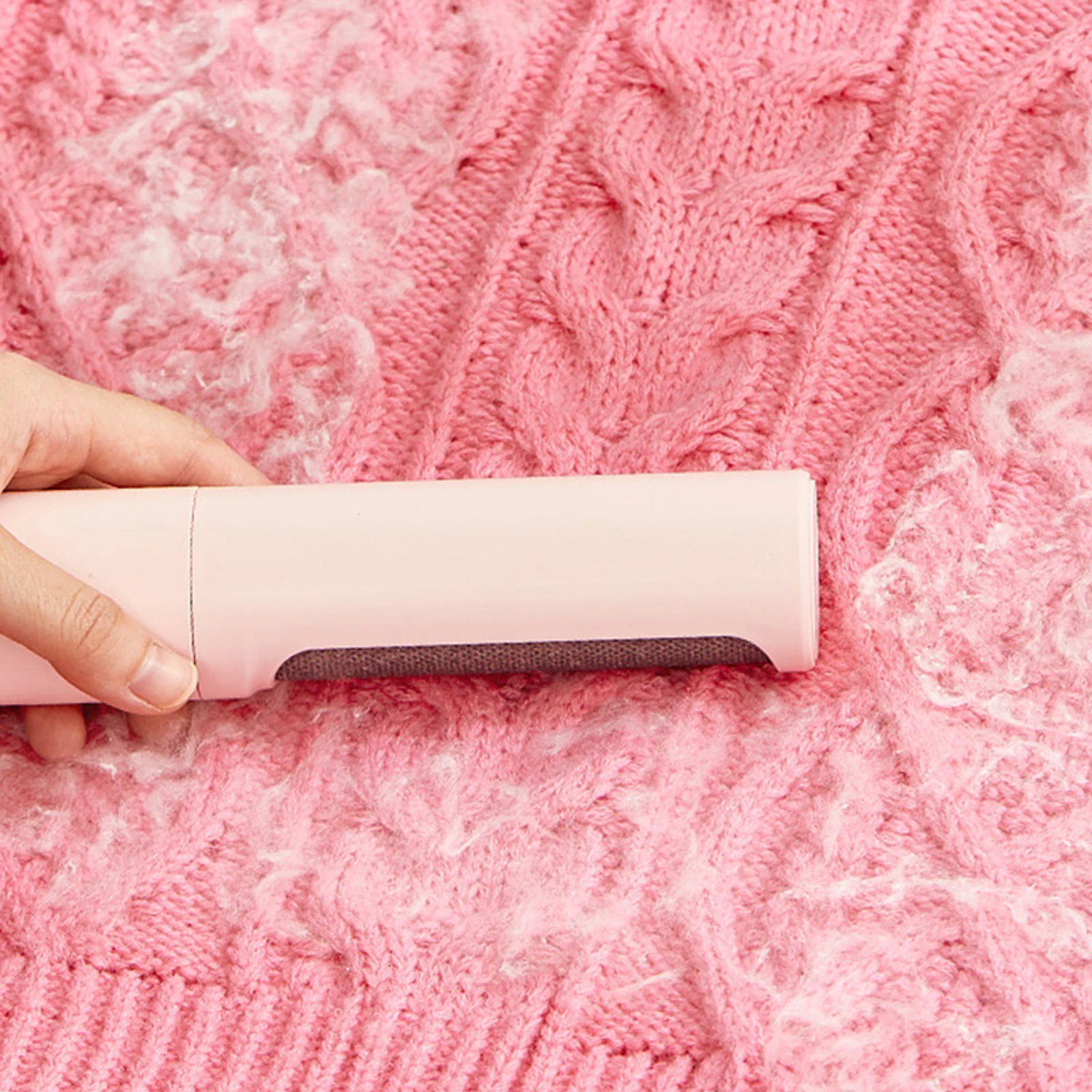
- Something for the fur that escapes. The Reusable Pet Hair Remover Brush pulls hair out of sofa fabric.
The grooming tools we stock are all on our dog grooming tools page.
How to brush your dog without a struggle
- Pick a calm moment. After a walk works well, when your dog is ready to rest.
- Keep the first sessions short. A few minutes is enough. Stop while your dog is still relaxed, and give a treat.
- Brush the way the hair grows. Work in small sections and reach down to the skin. The American Kennel Club grooming guide recommends this so the undercoat gets brushed too.
- Check the hiding spots. Mats form first behind the ears and under the legs.
- Finish with the comb. Go back to any spot where it snags.
In shedding season, our guide on how to deshed a dog sets out a weekly routine between baths.
Brushing mistakes that make shedding look worse
- Brushing only the top layer of a double coat. The loose undercoat stays in and packs down. Rake it out first.
- Pressing hard with a slicker. The pins can scrape the skin. If the skin looks red after brushing, give it a few days and brush more gently.
- Bathing a matted dog. Water tightens mats. Comb them out first, or ask a groomer.
- Dry brushing a heavy shedder on the sofa. The loose hair floats and settles on the cushions. Brush outside, or dampen the coat with a spray brush. For hair that already landed, see how to get dog hair off a couch.
When to stop and call your vet
Brushing is a good time to check your dog’s skin. The American Kennel Club grooming guide advises contacting your vet about cuts, sores or unusual skin. Call too if you find a lump or a bald patch, or if redness from brushing does not settle within a few days. Fleas or ticks are worth a call as well.
Questions about choosing a dog brush
What is the best dog brush for shedding?
For a double coat, an undercoat rake does most of the work, followed by a slicker brush. For a short coat, a rubber brush or a spray brush catches loose hair before it lands on the sofa. Brush more often in spring and fall, when many double-coated dogs drop their undercoat.
What is the best brush for a short hair dog?
A rubber brush or a bristle brush. Both grab loose hair from the surface and massage the skin without scratching it. Slicker brushes and rakes are made for longer coats and have little to grip on a Beagle or a Boxer. Once a week is enough for most short coats.
Do I need a slicker brush or an undercoat rake?
A double-coated dog needs both, and the rake comes first. It pulls loose undercoat from deep in the coat, then the slicker smooths the top and catches small tangles. For curly, long or wire coats with no thick undercoat, a slicker and a metal comb are usually enough.
How often should I brush my dog?
It depends on the coat: most short coats need one session a week. Double coats need one or two, and more in shedding season. The American Kennel Club says long-coated breeds often do best with daily brushing. Curly coats need a light brush most days so tangles don’t turn into mats.
Can the wrong brush hurt my dog?
Yes. A slicker pressed hard can scrape the skin, and a harsh deshedding blade used too often can damage the top coat. Use light pressure, brush in short strokes and stop if the skin turns red. If the redness or any sores don’t settle, call your vet.
Still not sure which group your dog belongs to? Go back to the coat check and part the fur at the shoulder. Once you know the coat, the table gives you the brush, and our dog grooming tools page has the ones we stock.
About the author
Mila is a mother of two and a dog owner in Lisbon, Portugal. She looks for things that make family life with a dog more comfortable. She believes in quality products that fit the dog and the home well.