
Dog car anxiety: how to help a nervous dog?
By Mila · Last reviewed October 2026
Some dogs jump into the car before you have opened the door properly. Others pant, shake, drool or plant their feet on the driveway. Dog car anxiety is common. Most of it comes from the car feeling bad: a queasy stomach, a past scare, or rides that only ever end at the vet. The fix is slow practice that makes the car a better place to be, plus a setup that keeps your dog secure and comfortable.
This guide covers behavior and comfort. It is not medical advice. If your dog vomits, drools heavily or panics in the car, start with a call to your vet.
Signs your dog is anxious in the car
- Panting or yawning when the dog is not hot or tired
- Drooling, lip licking or vomiting
- Whining, barking or shaking
- Pacing, or trying to climb into the front
- Refusing to get in, or hiding when the car keys come out
Drooling, lip licking and vomiting can point to motion sickness rather than fear. Many dogs have a bit of both. Your vet can tell you which one you are dealing with.
Why some dogs get anxious in the car?
- Nausea. A dog that feels sick in the car learns to dread it.
- Bad destinations. If the car only goes to the vet or the groomer, your dog learns what the car means.
- A past scare. A sudden stop, a loud noise or a long hot trip can stick.
- Too much, too soon. A dog that never rode in a car as a puppy may find the noise and movement strange.
Build calm car rides step by step
Go at your dog’s pace. Do short sessions, once or twice a day, and stop each one while your dog is still relaxed. If your dog stops taking treats, that step was too much. Go back one step next time.
- Treats by the parked car. Open a door and reward your dog for looking at the car or walking toward it. Keep your dog on the leash unless you are somewhere secure.
- Sit inside, engine off. Get in with your dog and give treats, or feed a meal on the back seat. Then get out and go for a short walk.
- Engine on, car parked. Repeat step 2 with the engine running. Stay here until your dog eats calmly.
- Around the block. Drive for two to five minutes and end somewhere good, like a short walk or a game.
- Longer, and somewhere fun. Build up the time slowly. Drive to a park or a friend’s house more often than to the vet.
Set up the car so your dog feels secure
Give your dog the same safe spot every trip
The back seat is the safest place for a dog. Use a well-fitted harness with a seat belt clip, or a secured crate. Clip to the harness, never the collar. Keep the strap short enough that your dog cannot reach the front seats.
Close the gap and keep the view
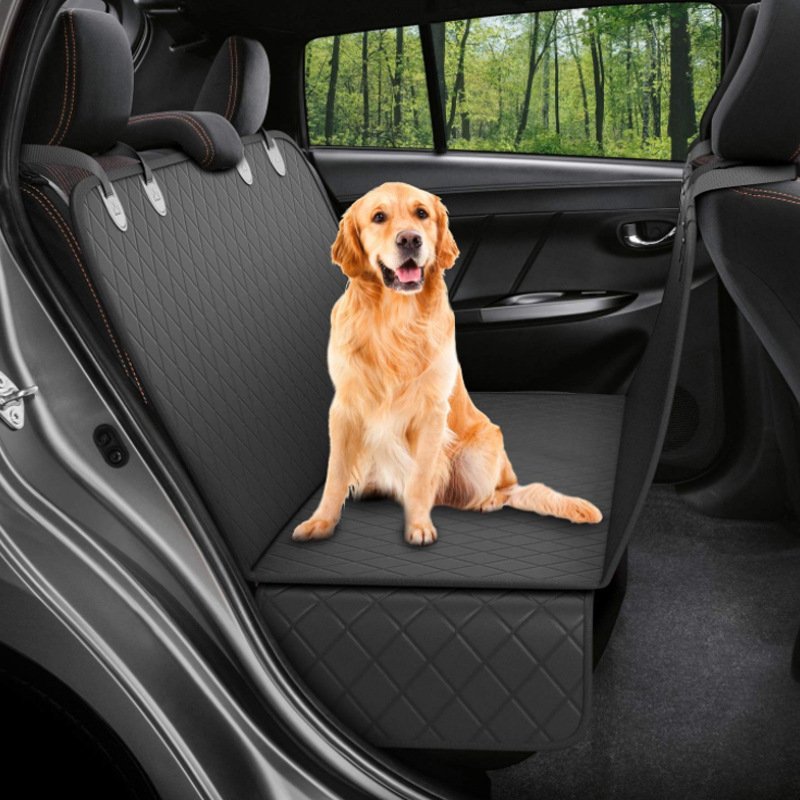
The Mesh View Car Seat Cover turns the back seat into a hammock. It closes the footwell gap behind the front seats, so your dog cannot slide down or climb forward. A mesh window lets your dog see you, and some dogs settle better once they can. It also has a waterproof coating, so drool and wet paws stay off the seat. A seat cover is not a restraint. Use it with the harness and seat belt clip.
Bring a smell from home
A mat or blanket your dog already sleeps on gives the car a familiar smell. The Padded Fleece Pet Mat fits on the back seat or in a crate, and goes in the washing machine after the trip.
Keep the car cool and the drive smooth
Cool the car down before your dog gets in on a warm day, and open a window a little for fresh air. Accelerate and brake gently. Pick routes with fewer sharp bends while your dog is learning. Never leave a dog alone in a parked car on a warm day, even with the windows open.
Ask about meals before a drive
If your dog gets car sick, ask your vet whether to feed a smaller meal or skip it before longer drives.
Longer trips
Stop every couple of hours so your dog can stretch, sniff and drink. The 3-in-1 Travel Water Bottle holds the water and has a tray your dog drinks from. You do not need a separate bowl at the roadside. The Drive Set pairs it with the seat cover. Put the leash on before you open the door at every stop. For the full packing list, see our soft carrier packing list for a short trip.
When to talk to your vet
Call your vet if your dog vomits on most trips or the fear is getting worse. Call too if the drooling or panic does not ease after a few weeks of practice. Your vet can check for motion sickness, talk through options, and refer you to a qualified behaviorist if needed. Do not give your dog any medicine or calming supplement for car rides without your vet’s advice.
Questions about dog car anxiety
How do I calm my dog in the car?
Start with the car parked and the engine off, and pair it with treats or a meal. Add the engine, then very short drives that end somewhere your dog enjoys. Keep your dog in the same secure spot on the back seat. Move on only once your dog is calm at the current step.
Is it car anxiety or motion sickness?
It can be either, or both. Drooling, lip licking and vomiting suggest nausea. Shaking, whining, pacing and refusing to get in point more toward fear. A dog that felt sick in the car often becomes anxious about it later. Your vet can help you tell them apart and treat the sickness side.
Should my dog ride in the front seat?
No. The back seat is the safer place. A front airbag can injure a dog in a crash, and a loose dog in the front distracts the driver. Use the back seat with a harness and seat belt clip, or a secured crate, and a seat cover that stops your dog climbing forward.
How long does it take to get a dog used to car rides?
It depends on the dog and how strong the fear is. Plan on short sessions several times a week over a few weeks. Let your dog’s reactions set the pace, not the calendar. If your dog takes treats calmly and lies down in the car, you are ready for the next step.
For more travel gear, see our Calm Travel page.
About the author
Mila is a mother of two and a dog owner in Lisbon, Portugal. She looks for things that make family life with a dog more comfortable. She believes in quality products that fit the dog and the home well.