
How cold is too cold for dogs? A simple guide for winter walks
By Mila · Last reviewed October 2026
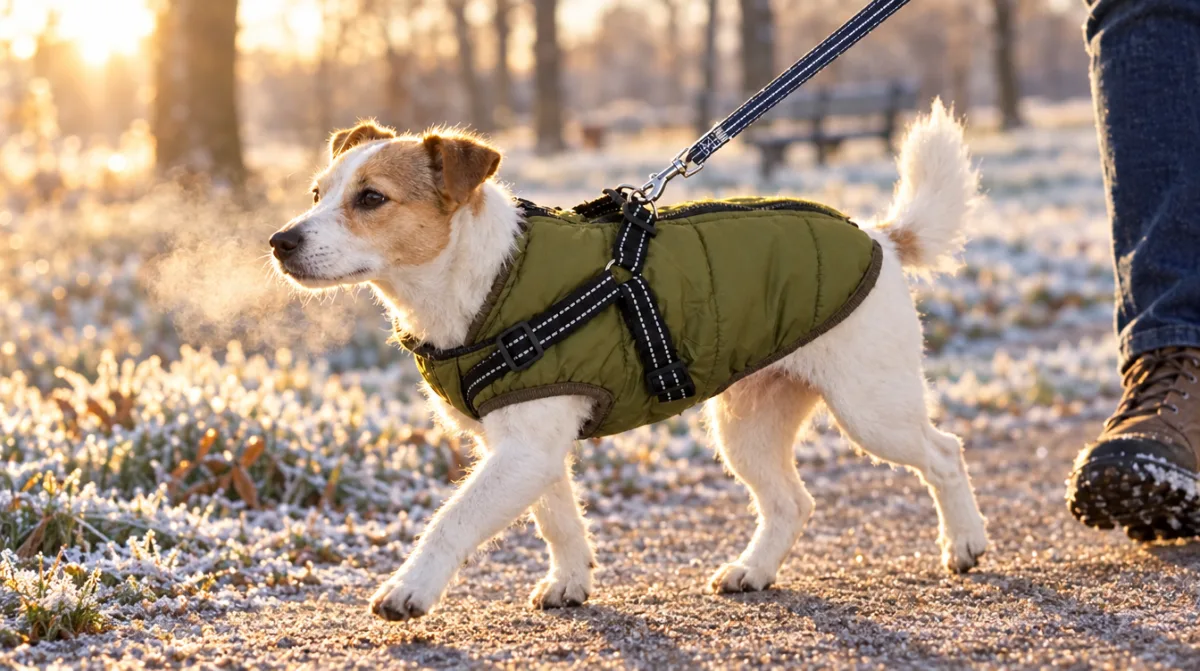
The first really cold morning always catches someone out. You open the door, the air bites, and your dog stops on the step and looks back at you. Some dogs march on as if it’s spring. Others start shivering before the end of the street.
So how cold is too cold for dogs? There isn’t one number that fits every dog. A Husky and a Whippet can stand side by side at the same temperature and have a very different walk. What matters is the weather plus the dog in front of you: coat, size, age and health. This guide gives you a starting point and the signs that tell you when to head home.
This is general information, not veterinary advice. If your dog has a health condition, ask your vet what’s safe for them in winter.
How cold is too cold for dogs: the short answer
Petplan staff vet Dr. Kim Smyth, speaking to NPR, put the line at under 30°F (about −1°C), counting wind chill. Below that, she said, no dog should be outside for an extended period. Her guidance was adapted from the Tufts Animal Care and Condition scale.
That’s a ceiling for long exposure, not permission to stay out for hours at 35°F. Plenty of small or thin-coated dogs are uncomfortable well above freezing, especially when it’s wet or windy.
What changes the answer for your dog
The same thermometer reading feels different depending on the dog. Run through these before you decide how long to stay out.
| Factor | Feels the cold sooner | Copes better |
|---|---|---|
| Coat | Short, thin or single coat | Thick double coat |
| Size | Small and toy breeds | Large, heavier dogs |
| Legs | Short legs, belly close to the snow | Longer legs |
| Age | Puppies and senior dogs | Healthy adults |
| Body | Very lean dogs | Dogs at a healthy weight |
| Health | Diabetes, heart, kidney or hormone conditions | No ongoing conditions |
| Weather | Wind, rain, wet snow | Dry, still air |
The AVMA lists the same groups at higher risk: short-haired and short-legged pets, and those who are elderly, very young, thin or ill. Wet weather matters as much as temperature. A soaked coat stops trapping warm air, so a rainy 40°F walk can chill a small dog faster than a dry, frosty one.
Signs your dog is too cold
Shivering is usually the first one. Dr. Smyth calls it the first sign, and it means it’s time to go in, not to push on to the park.
Watch for these too:
- Whining, or looking anxious and turning back toward home
- Slowing down, lifting paws or refusing to walk on
- Weakness, or searching for somewhere warm to burrow
- Sudden limping, which can mean ice packed between the toes
The AVMA lists these as possible signs of hypothermia. If you see them, bring your dog inside, wrap them in a warm towel or blanket and call your vet. Frostbite, it adds, may not show for a few days, so check ears, tail tips and paws after a very cold outing.
Does my dog need a coat?
Some dogs do, and some don’t. A Husky, a Bernese or a Newfoundland already wears one. For short-coated, small, lean or older dogs, a coat can turn a five-minute shiver into a proper walk. The AVMA suggests a sweater or coat for dogs with short coats or those bothered by cold. It also advises keeping several dry ones, because a wet coat can leave a dog colder than no coat.
A good winter coat for a small dog covers the back and sides. It shouldn’t rub behind the front legs or stop them squatting or lifting a leg. Our Padded Winter Dog Coat has a water-resistant outer, a padded lining and a leash ring on the back. It’s sized for small dogs, S to XL by chest from 36 to 48 cm (14.2 to 18.9 in). That suits terriers, Dachshunds, French Bulldogs and similar builds rather than Labradors.
On wet days, a waterproof layer matters more than padding. For readers in Europe, our Reflective Dog Raincoat keeps rain off the back and adds reflective trim for dark evenings. It ships within the EU only.
How to measure your dog for a coat
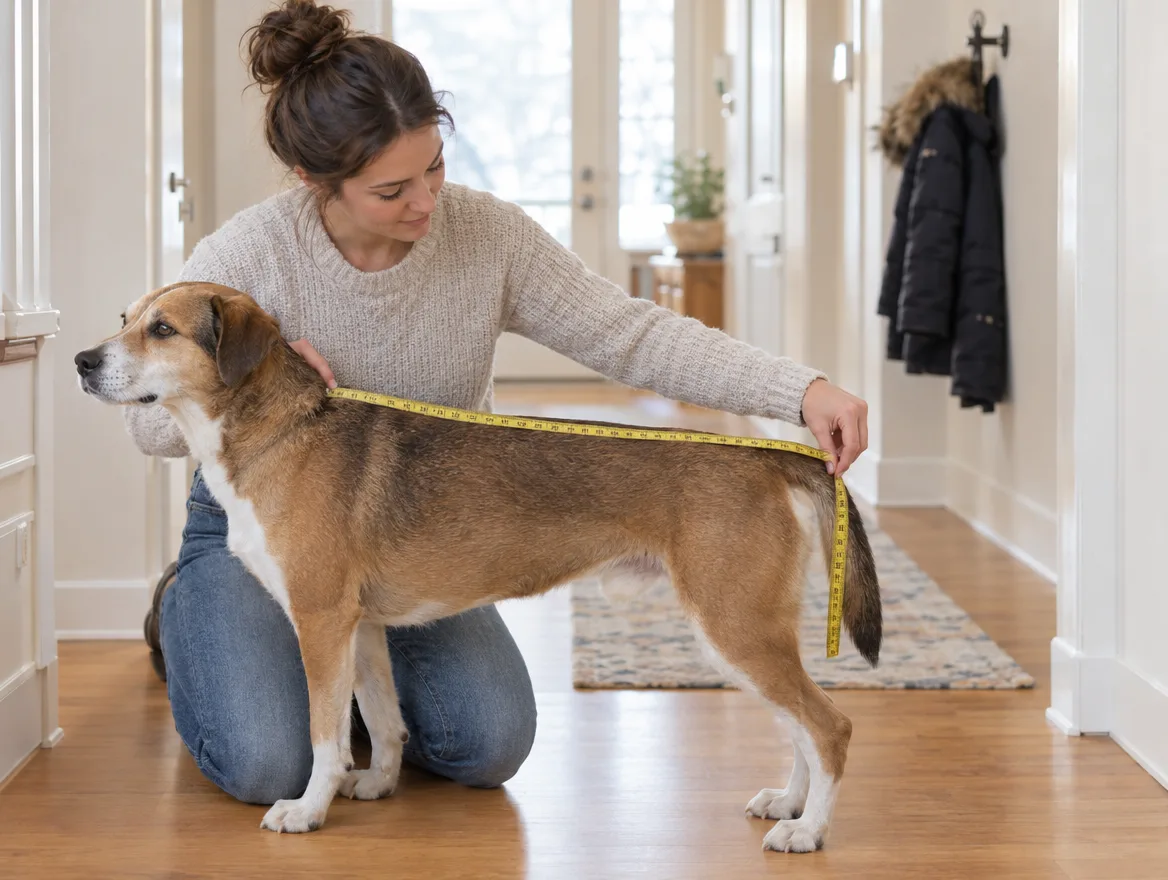
Use a soft tape measure and take three numbers with your dog standing.
- Chest: around the widest part, just behind the front legs.
- Neck: around the base of the neck, where a collar sits.
- Back: from the base of the neck to the base of the tail.
Choose by chest first. If your dog falls between two sizes, size up. Once the coat is on, you should be able to slide two fingers under the strap.
Winter walk routine that keeps dogs comfortable
Cold weather doesn’t mean no walks. It means shorter, smarter ones.
- Go out at the warmest, brightest part of the day when you can.
- Take two or three short walks instead of one long one.
- Keep moving. Standing around chatting at the park gate is when small dogs chill.
- Choose dry routes over wet grass when it’s close to freezing.
- Light your dog up for dark mornings. The LED Mesh Dog Harness makes them easier for drivers to see.
After the walk: paws, salt and drying off
Road salt and de-icers are hard on paws, and dogs lick their feet once they’re home. The AVMA advises wiping feet, legs and belly after walks and checking for cracked or bleeding pads. It also warns that even small amounts of antifreeze can be deadly, so clean up any spill in the garage straight away.
A quick routine at the door helps:
- Rinse the paws. Our Paw Cleaner Cup takes salt and grit out from between the pads in a couple of minutes.
- Dry the coat and legs properly. The Microfiber Dog Towel has hand pockets, so it stays in your grip when your dog shakes.
- Hang the coat to dry away from the radiator, ready for the next walk.
Questions about dogs in cold weather
How cold is too cold to walk a dog?
There’s no single number for every dog. One vet’s guideline, reported by NPR, is that below 30°F (about −1°C) including wind chill, no dog should stay outside for long. Small, short-coated, young and older dogs may need shorter walks well above that, especially in rain.
Do dogs feel the cold like we do?
Many do, but it depends on the dog. Thick double-coated breeds handle cold far better than small, thin-coated or lean dogs. Wind and wet fur make any dog colder. Watch your own dog: shivering, slowing down and lifting paws are the clearest signs they’ve had enough.
Can dogs get frostbite?
Yes. Ears, tail tips and paws are most exposed. The AVMA notes that frostbite may not be obvious for a few days after the cold exposure. If your dog has been out in very low temperatures, check those areas and call your vet about pale, gray or sore-looking skin.
Should my dog wear a coat indoors?
Usually not. Indoors, a coat can make your dog too warm, and it can rub if worn for hours. Put it on just before the walk and take it off when you get home. Dry it fully before the next walk, because a damp coat can leave your dog colder.
Is a wet coat worse than no coat?
It can be. The AVMA advises keeping several dry coats on hand, because a wet garment can make a dog colder. On rainy days, a waterproof raincoat often helps more than a padded coat. Dry your dog and the coat properly once you’re home.
The next time your dog stops on the step and looks back at you, you’ll know what they’re asking. Check the weather, check the dog, and pick the walk to match. For the coat, start with our Padded Winter Dog Coat and the size guide on its page.
About the author
Mila is a mother of two and a dog owner in Lisbon, Portugal. She looks for things that make family life with a dog more comfortable. She believes in quality products that fit the dog and the home well.